
 MENU
How to play
Everyone gets the same prompt. Everyone types one answer. Right answers that fewer people would give fly further from Earth, and the player who ends up furthest out wins.
That's the whole idea. A prompt like “name a vegetable” has hundreds of right answers, and Nichenaut knows how common each one is. Carrot barely leaves the launch pad. Kohlrabi is out among the stars. You aren't racing anyone and there's no buzzer: the skill is knowing a topic wide enough to find the answer nobody else in the room will think of, and still getting it right.
A mission, start to finish
A game of Nichenaut is called a mission. Here is how one goes when you play with friends.
- Someone hosts. They open nichenaut.app, press HOST A MISSION, pick the topics and how long each prompt lasts, and get a four-letter room code.
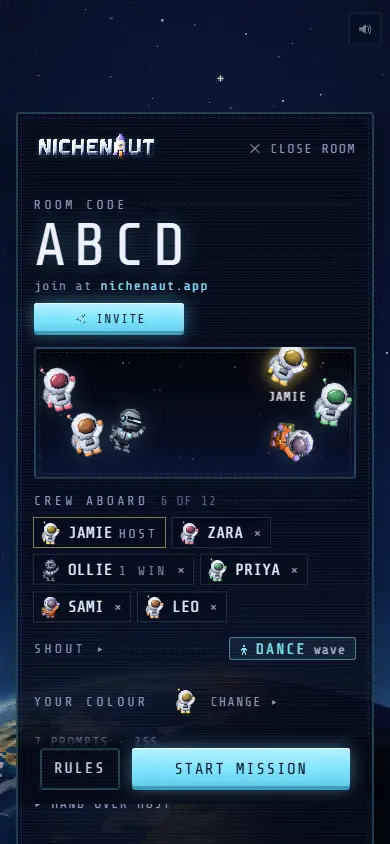
- Everyone joins. Players type the code on the home screen (or open the invite link) on their own phone, tablet or laptop, pick a name and a colour, and appear in the lobby as an astronaut.
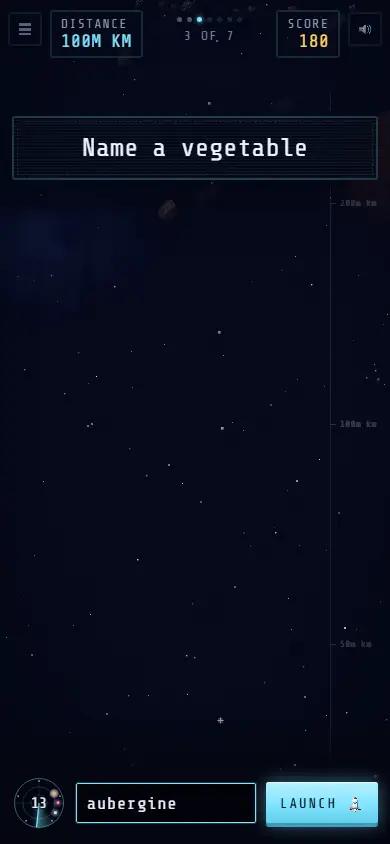
- A prompt appears. Everyone sees the same one, with a clock. The default is 25 seconds.
- You answer. Type one answer and launch it. You can't change it once it's sent, so think before you hit the key. If you're stuck you can pass.
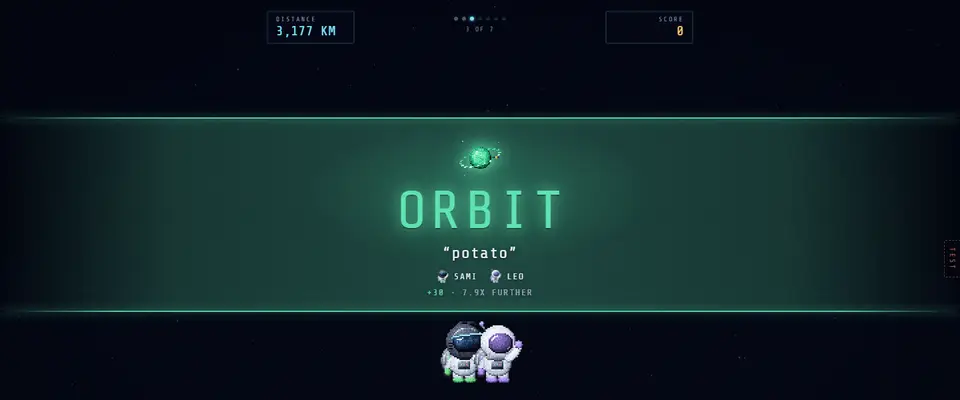
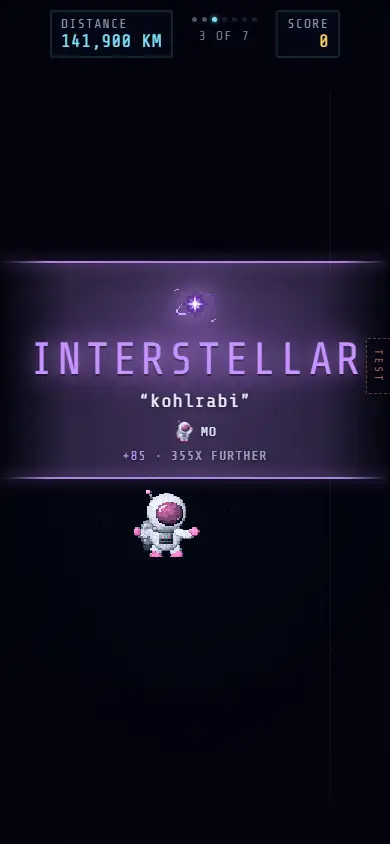
- The reveal. When everyone is in (or time is up), the answers fly one after another, from the most common to the rarest. Each one lands at its tier with its points and the names of whoever said it.
- Standings. A short look at who is furthest out, then the next prompt.
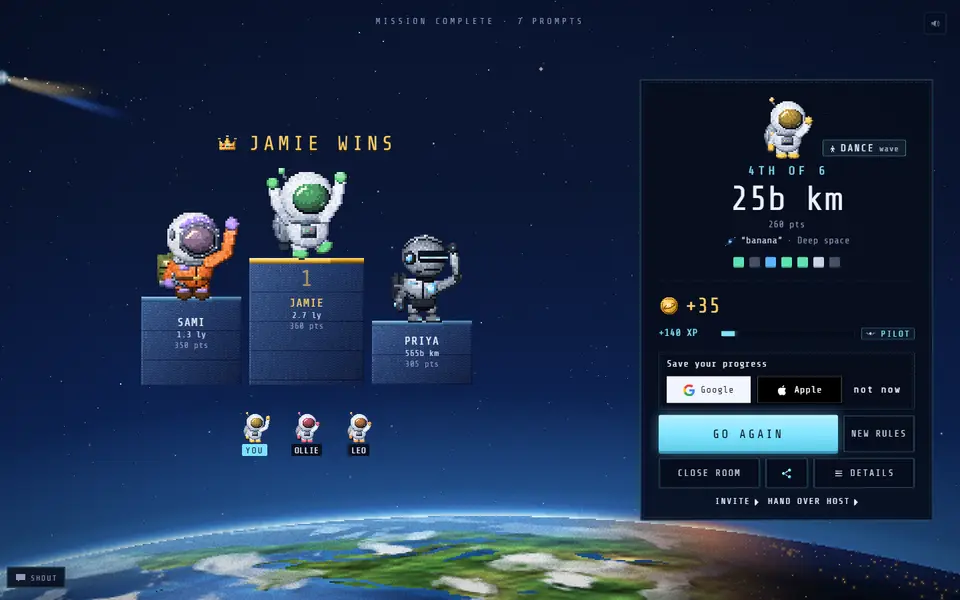
- The finish. After the last prompt (seven by default) the winner takes the podium, and everyone sees how far they flew and what they earned.
Tiers and points
Every prompt has its own list of right answers, often several hundred and sometimes well over a thousand, and each one sits in a tier. The tier decides the points:
| Tier | Points | What it means |
|---|---|---|
| Liftoff | 10 | The handful of answers almost everyone reaches for first. "Spaghetti" for a type of pasta. |
| Space junk | 15 | An answer that feels clever, but everyone had the same clever idea. |
| Orbit | 30 | Solid, well known answers. Plenty of people will say these too. |
| Deep space | 60 | Properly uncommon. Most people know it, few think of it. |
| Interstellar | 85 | The long tail: right answers that hardly anyone gives. |
| Supernova | 100 | A few hand-picked gems per prompt, each with a fact attached. |
| Stalled | 0 | Not a right answer, or nothing sent before the clock ran out. |
If two of you give the same answer, you both get its full points. Nobody is punished for being right at the same time, though a shared Liftoff won't get you far.
Space junk is the odd one out. It is for answers that sound obscure but turn out to be what every smart player says (orzo, when asked for a type of pasta, is a classic). It scores a little more than Liftoff and a lot less than you hoped.
Distance
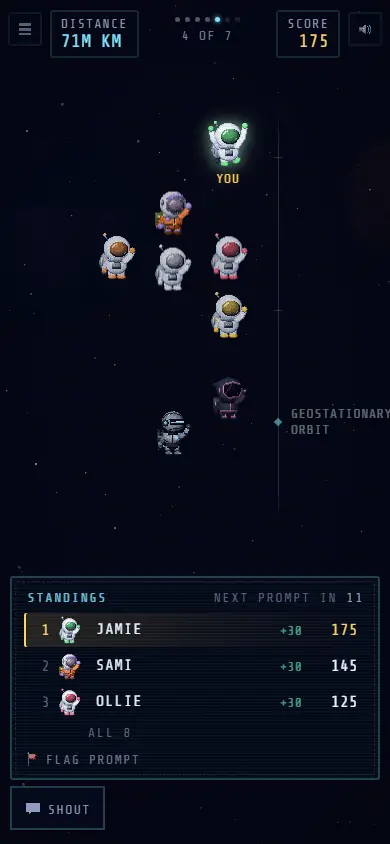
Points are turned into distance from Earth, and that's what the game shows you. Zero points is low orbit, about 400 km up. Every 100 points takes you a thousand times further, so 100 points is roughly the distance to the Moon and a whole mission of rare answers can take you past the edge of the observable universe. A single Deep space answer flies about 60 times further than a Liftoff one, which is why one brave answer can turn a mission round.
At the end of a mission your total also gets a verdict, from Liftoff (plenty of space left out there) to Supernova (nobody saw you coming). Over seven prompts, around 450 points is Supernova territory.
How answers are checked
You don't have to type an answer exactly as the list has it. The checker ignores capitals, accents, punctuation, a leading “the” and plurals, and it knows common alternative names, so “eggplant” is aubergine and “CR7” is Cristiano Ronaldo.
- Spelling. Small typos are forgiven. A slip on a long word is usually just accepted; if it could be two different answers, or you're a little further off, the game asks “did you mean” and you tap to confirm. Very short answers only get one slip.
- Surnames. A surname on its own (“Messi”) counts for the well known answers, up to Orbit. For Deep space and rarer people you need the full name, otherwise anyone could type a common surname and hope.
- One answer only. Typing two answers at once (“messi ronaldo”) counts as neither.
- Answers that aren't on the list. No list is ever complete, so when a right answer is missing, an AI model (Claude, made by Anthropic) checks it. It only sees the prompt and what you typed, nothing about you. It accepts real, specific things that clearly fit the prompt, forgives obvious misspellings, and turns down vague words, jokes, made-up names and anything rude. If it accepts your answer it lands like any other hit, at the tier it thinks fits (never Supernova, those are only hand-picked), and it joins the list for everyone after you. Practice never uses it.
The tiers aren't fixed guesses either. Every day the game looks at what players actually typed, and an answer that turns out to be far more common (or far rarer) than its tier says moves one step, once there is enough play to be sure. So the lists get fairer the more people play.
Optional house rules
A host can switch on two extras under more options. Appeals lets the room vote in a right answer the list missed, which then scores as Deep space. Best answer vote lets everyone pick their favourite answer of the round for bonus points. Both are off by default to keep things quick.
There is also a custom mission, where players write the prompts and the room rates each other's answers instead of a list.
Tips
- Skip your first thought. If it came to you in half a second, it came to everyone else too. Go for the second or third thing you know.
- Stay sure. A rare answer only counts if it's right. An Orbit answer you're certain of beats a Supernova guess that stalls.
- Think in lists. For “name a river” walk round a map in your head instead of waiting for a name to pop up.
- Mind the room. With friends who all love football, the obvious football answers vanish fast, so go sideways.
- Use the clock. There's no prize for answering first. Take the time you're given.
- Practise. Practice lets you try any prompt and see where an answer would land, and themed missions are a good way to learn a topic.
Where next
See all the ways to play on the modes page, browse the topics, or read the FAQ. Teachers can start with the class mode guide.