
 MENU
Vocabulary games for secondary lessons
Six vocabulary games that get a whole secondary class retrieving key words, with timings, Tier 2 and Tier 3 words explained, and prompts you can use on the board.

Pupils meet thousands of words in secondary school, and most of them are only taught once. The words that stick are the ones pupils have to pull out of memory again and again, in different places, a little harder each time. Games are a good way to do that without it feeling like a test.
Here are vocabulary games that work in any subject with secondary classes, with timings, and the kind of prompts that get a whole class retrieving at once.
Which words are worth the time
A common way to think about this comes from Isabel Beck and colleagues, who sort words into three tiers:
- Tier 1: everyday words most pupils already know, like house or happy.
- Tier 2: words that turn up across subjects and in good writing, like analyse, significant or reluctant. These pay off the most.
- Tier 3: subject words, like photosynthesis, alliteration or denominator. Essential in their subject, rare outside it.
Most of the games below work for both Tier 2 and Tier 3 words. The trick is to keep coming back to the same words over weeks, not to cover as many as possible once.
Six vocabulary games
1. Name as many as you can
Give a category from the topic, like name an organ in the human body or name a literary device, and two minutes. Pupils list as many as they can, then compare. Lists are harder than single questions, because pupils have to search their memory rather than recognise an answer.
2. Rarest right answer
Everyone gives one answer to the same prompt, and right answers that fewer pupils gave score more. It pushes pupils past the first word that comes to mind towards the ones they half know, which is exactly where vocabulary grows. This is the idea behind Nichenaut (below).
3. Word families
Put a root on the board, like bio, graph or port, and pupils find as many words built on it as they can, with a meaning for each. Good in science and languages.
4. Definition to word
Read out a definition, and pupils write the word on mini whiteboards. Then flip it: show the word, and pupils write the definition in their own words. The second way round is harder and more useful.
5. Taboo
A pupil describes a key word to their team without using the word itself or two banned words underneath it. Photosynthesis without plant or light is a real test of understanding.
6. Use it in a sentence
At the end of a lesson, give three key words and ask for one sentence that uses all three correctly. It checks meaning, not just recall, and makes a quick plenary.
| Game | Time | Best for |
|---|---|---|
| Name as many as you can | 3 to 5 minutes | Starter, retrieval |
| Rarest right answer | 5 to 10 minutes | Whole class, breadth |
| Word families | 5 minutes | Roots and spelling |
| Definition to word | 5 minutes | Checking meaning |
| Taboo | 10 minutes | Deep understanding |
| Use it in a sentence | 3 minutes | Plenary |
Vocabulary on the board with Nichenaut
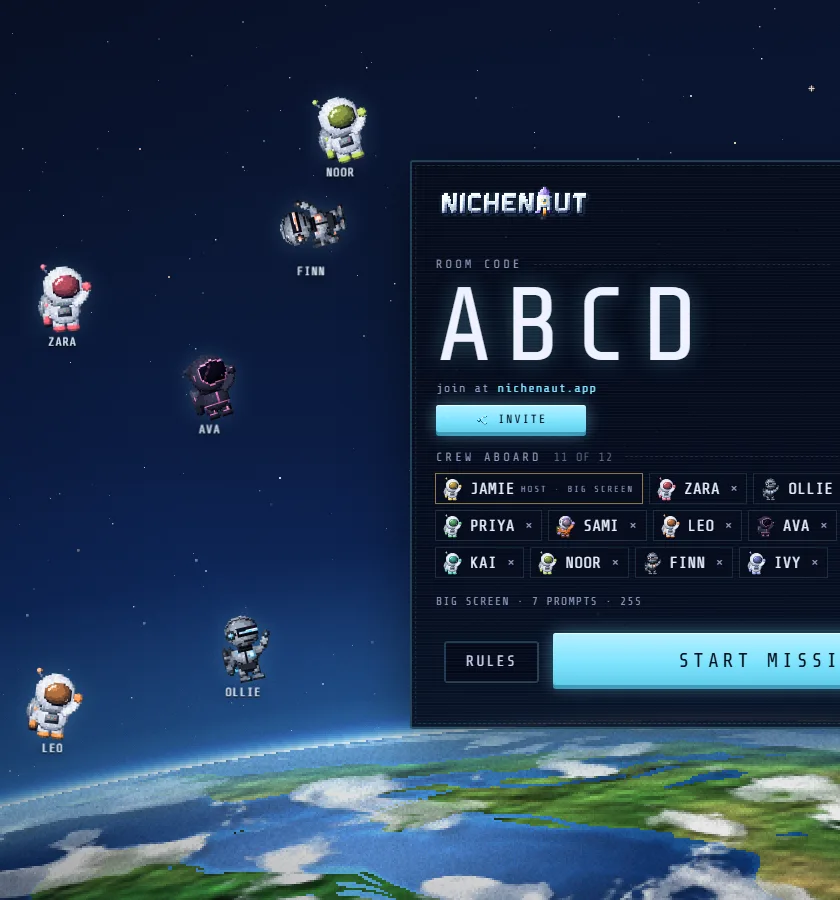
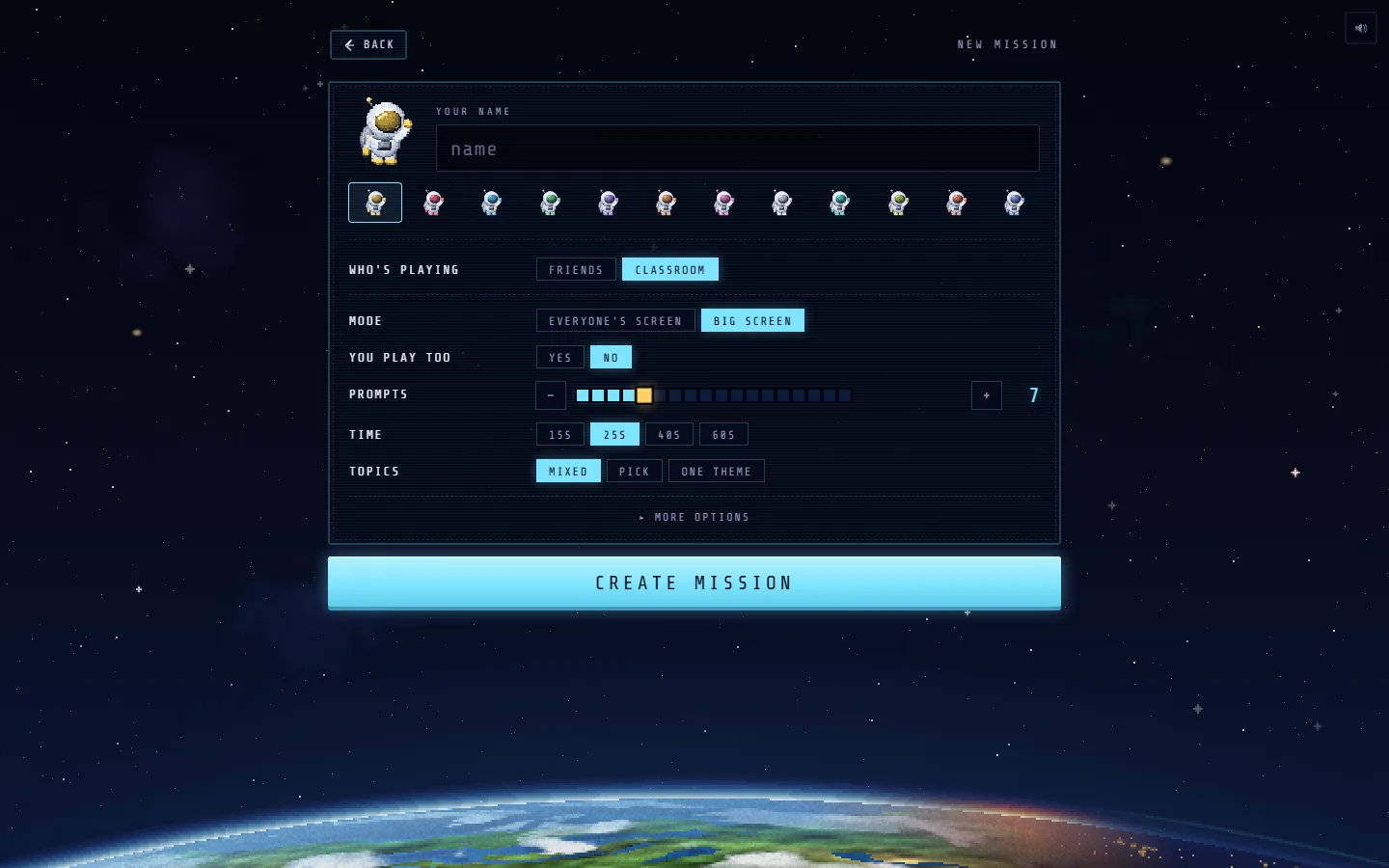
Nichenaut is a free browser quiz for pupils aged 13 and over. In class mode the teacher's screen shows a prompt, every pupil types one answer on their own device, and the board then reveals every answer the class gave, from the most common to the rarest. Each prompt has a long list of accepted answers, so a pupil who knows a less common word is rewarded for it.
The words and language topic has prompts like these:
- Name a figure of speech or literary device
- Name an irregular verb
- Name a word with a silent B
- Name a word that ends in -ous
- Name a word that begins with "micro"
- Name a Latin word or phrase used in English
- Name a French word or phrase used in English
- Name an English word that comes from Spanish
And subject topics have their own key word prompts:
- Name an organ or other body part inside you
- Name a type of cell in the human body
- Name a maths word or topic
- Name a shape
- Name a historical period or era
- Name a feature of the ocean floor or an ocean current
Class rooms take up to 25 pupils, need no accounts, have no chat, and show no adverts. A host can also add their own prompts under more options, for a unit's key words.
Making the words stick
- Space it out. Bring the same words back next lesson, next week and next half term. Short and often beats long and once.
- Low stakes. Keep scores light, so pupils guess rather than leave a blank. A wrong guess you correct is still retrieval.
- Say it, then write it. Pupils who can say a word aloud are far more likely to use it in writing.
- Mix subjects. A Tier 2 word like evaluate means the same in history and science. Point that out.
Questions people ask
What are good vocabulary games for secondary school?
Name as many as you can, rarest right answer, word families, definition to word, Taboo and use it in a sentence all work with secondary classes. Each takes three to ten minutes and needs little prep.
What are Tier 2 and Tier 3 words?
In the three tier model from Isabel Beck and colleagues, Tier 2 words are general academic words used across subjects, like analyse or significant. Tier 3 words belong to one subject, like photosynthesis or denominator.
Is there a free online vocabulary game for a whole class?
Nichenaut is a free browser quiz for pupils aged 13 and over. The teacher hosts class mode on the board, pupils answer on their own devices with a room code, and rarer right answers score more. No accounts are needed.
How do I make vocabulary stick?
Bring the same words back several times over weeks, keep it low stakes so pupils try, have pupils say the word aloud, and point out when a word means the same thing in different subjects.

free, in the browser
Play Nichenaut
Every pupil answers the same prompt and the rarest right answers score most. Free in the browser, for pupils aged 13 and over.
 PLAY NOW
More from the blog
 Classroom
Tutor time quiz ideas that need no prep
Seven quick quiz formats for secondary tutor time, a weekly routine, and how to run a whole group quiz on the board with no prep and no pupil accounts.
 Classroom
End of term quiz ideas for secondary classes
Round ideas for an end of term class quiz, an hour planned minute by minute, seasonal prompts, and how to run it on the board with teams and no prep.
 Classroom
 games that work on school devices and networks
What to check before relying on a quiz tool in a lesson: browser or app, pupil accounts, chat, adverts and school web filters, and what to send IT to get a site allowed.