
 MENU
Starter and plenary activities that need no prep
Quick starters and plenaries for secondary lessons that take a minute to set up: retrieval tasks, list challenges, odd one out and more, with timings.
The first five minutes of a lesson set the tone for the rest of it. A good starter gets every pupil thinking before you have finished taking the register. A good plenary tells you, and them, what actually went in. The problem is that both need to be quick to set up, because nobody has time to make a new resource for every lesson.
Here are the starters and plenaries that work again and again in secondary classrooms, all of them with little or no prep. Most are built on retrieval practice, the idea that pulling something out of memory strengthens it far more than reading it again. Timings are rough; adjust them to your class.
Why retrieval makes the best starter
A starter can do lots of jobs: settle the class, hook interest, check homework. The one that pays off most is retrieval. When pupils try to recall something from last week or last term, they make it easier to recall next time. It works best when it is low stakes (no marks, no pressure), spaced out (not just last lesson's content), and done by everyone at once rather than by the three hands that go up first.
That last point is the one most starters miss. A question to the class, answered by one pupil, is retrieval for one pupil. Everything below is designed so that the whole room has to think.
Retrieval starters (3 to 8 minutes)
1. Brain dump
Give a topic and two minutes. Pupils write down everything they remember, with books closed. Then they open their books and add what they missed in a different colour. The gaps show both of you what to revisit.
2. Name as many as you can
Ask for a list instead of one fact: name as many elements in group 1 as you can, as many causes of the First World War, as many words with a Latin root. Lists are more demanding than single questions because pupils have to search their memory more than once.
A twist that works well: after the time is up, read out answers and have pupils cross off any that someone else also wrote. The pupil with the most answers nobody else had wins. It rewards knowing a topic deeply, not just the first two things everyone remembers.
3. One prompt, everyone answers
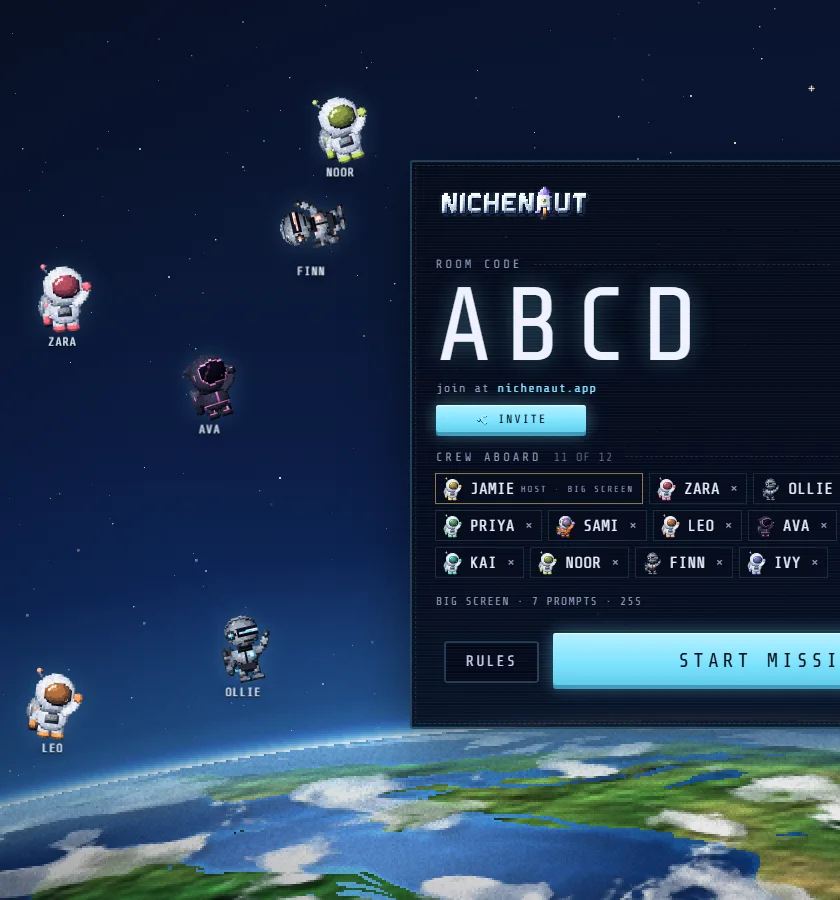
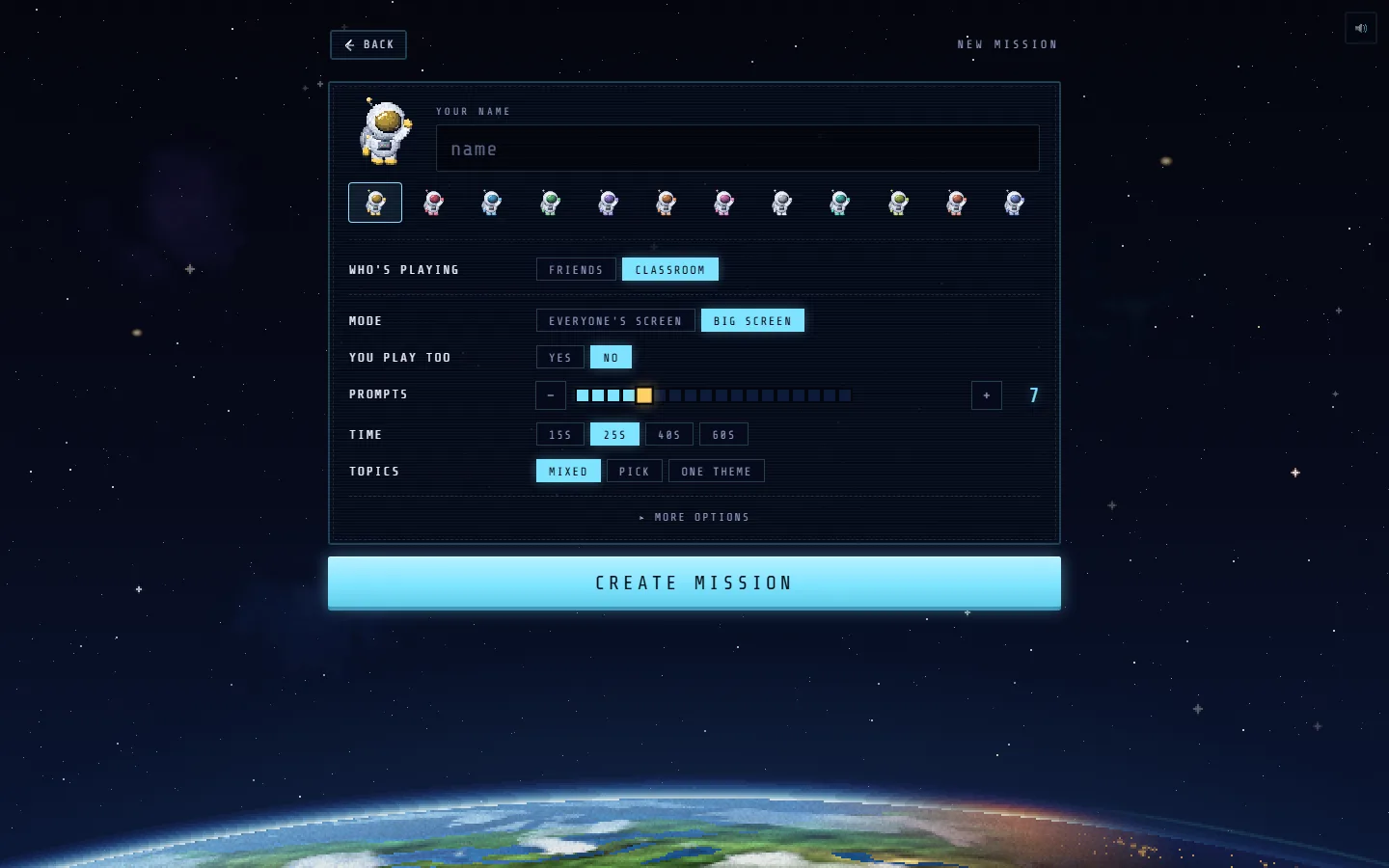
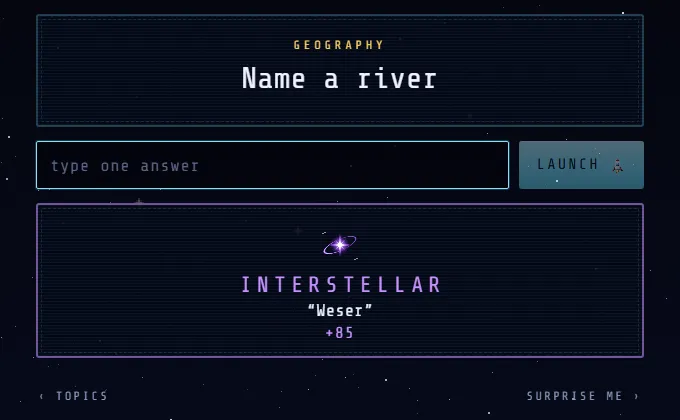
This is the same idea with a device per pupil, and it is what Nichenaut was built for. You put a prompt on the board, every pupil types one answer, and right answers that fewer people gave score more. The board then reveals the class's answers from the most common to the rarest, which is a ready-made discussion. Some prompts from the game that work as starters:
- Name a chemical element
- Name a bone in the human body
- Name an organ or gland in the human body
- Name a maths word or topic
- Name a geography topic you might study at school
- Name someone from Tudor England
- Name a character from a Shakespeare play
- Name a word that ends in -ous
- Name a revision technique or way to study
A mission can be as short as three prompts, which takes about five minutes including joining, so it fits as a starter without eating the lesson. Pupils join at nichenaut.app with the room code; nobody needs an account.
4. Retrieval grid
A grid of 9 to 16 short questions, colour coded by when the content was taught: last lesson, last week, last month, last term. Older questions are worth more points. Make one grid per unit and reuse it with the questions swapped.
5. Answer first
Write an answer on the board, like “photosynthesis”, “1066” or “a simile”. Pupils write as many questions as they can that have that answer. It forces them to think about what they know around the term, not just the definition.
6. Label it from memory
Show a diagram from a past lesson with the labels removed: a cell, a volcano, a map of Europe in 1914, a circuit. Pupils label it from memory, then check. Two minutes, no prep beyond hiding the labels.
7. Mistake spotting
Put up a short paragraph about last lesson's topic with three mistakes in it. Pupils find and fix them. This is good for common misconceptions, because you can plant the exact errors you saw in their books.
Starters that get them thinking (2 to 5 minutes)
8. Odd one out
Four words, images or numbers. Which is the odd one out and why? The best sets have more than one defensible answer, so pupils have to justify their choice. For example: iron, copper, mercury, sodium.
9. What's the question?
Show a striking image, a graph or a single statistic with no title. Pupils write the question they think it answers. A great hook for a new topic.
10. Would you rather
Two options linked to the topic: would you rather live in Athens or Sparta? Be an electron or a proton? Pupils pick and give one reason using the content. Quick, a bit silly, and it gets quiet pupils talking.
11. Rank it
Give five items to put in order: most to least important cause, most to least reactive metal, strongest to weakest argument. The ranking matters less than the discussion about the middle three.
Plenaries that show what went in (3 to 10 minutes)
A plenary is not just a summary. It is a chance to find out what pupils can now do that they could not do at the start, and to fix anything that went wrong before they leave.
12. Exit ticket
One or two questions on a slip of paper or a quick online quiz, answered alone. Sort them into three piles as pupils leave: got it, nearly, not yet. That tells you how to start the next lesson.
13. Three, two, one
Three things you learned, two questions you still have, one thing you could explain to someone else. Read a few out. The questions are often the most useful part.
14. The rare answer round
Go back to a prompt you used as a starter, or one close to it. Pupils who gave the common answer at the start often reach for something new at the end, and you can both see the difference. In Nichenaut a mission can be as short as three prompts, and the reveal shows the spread of answers on the board.

15. Teach it back
Pairs take turns explaining the key idea of the lesson to each other in one minute, without notes. The listener asks one question. You walk round and listen for what is missing.
16. Hot seat
One pupil sits at the front as a character, a scientist, a historical figure or even a molecule, and the class asks questions. They answer in role using what was learned. Best for the last ten minutes of a topic.
17. Fill the gap
Put up a summary of the lesson with key words missing. Pupils fill them in without a word bank. Add one gap that needs a full sentence for those who finish early.
18. Headline
Pupils write a newspaper headline that sums up the lesson in eight words or fewer. Read out the best. It forces them to decide what mattered most.
Making starters a habit
The best starter is one the class can begin without you. If pupils know that every lesson opens with a prompt on the board, they come in, sit down and start. A few habits help:
- Keep a small menu. Rotate four or five formats rather than inventing a new one each time. Pupils settle faster when they know the routine.
- Mix old and new content. A starter about last lesson is fine, but one that reaches back two months does more for long term memory.
- Keep it low stakes. No marks in the markbook. A leaderboard is fine if it is light hearted and resets often.
- Always close the loop. Spend 30 seconds on the answers. A starter nobody goes over is just a settling task.
Questions people ask
What is a starter activity in a lesson?
A short task at the very start of a lesson, usually 3 to 8 minutes, that gets every pupil working straight away. The most useful starters ask pupils to recall earlier learning, which strengthens memory.
What is the difference between a starter and a plenary?
A starter opens the lesson and usually reviews earlier learning or hooks interest. A plenary comes at the end, or at a pause in the middle, and checks what pupils learned in this lesson.
How long should a plenary be?
Anything from 3 to 10 minutes. A quick exit ticket takes three; a teach it back or hot seat activity takes closer to ten. Leave enough time to act on what you find out.
Are online quiz games good starters?
They can be, as long as everyone answers and pupils can join quickly. Games where everyone gets the full time to answer, rather than racing, give more of the class a real go at recalling.

free, in the browser
Play Nichenaut
One prompt on the board, every pupil answers, and the rarest right answers score most. A five minute starter with no prep.
 PLAY NOW
More from the blog
 Classroom
Games like Kahoot: free quiz games for the classroom
An honest look at the best Kahoot alternatives for teachers: Blooket, Gimkit, Wayground, Quizlet Live, Plickers and more, and what each one is good for.
 Tips
How to get better at general knowledge quizzes
Practical ways to know more and remember it under pressure: think in lists, learn the second answer, practise little and often, and stop freezing on the obvious one.
- Party games
Games like Pointless you can play with friends
Love finding the answer nobody else thought of? Here are the best ways to play a Pointless style game with friends, online or round a table.